
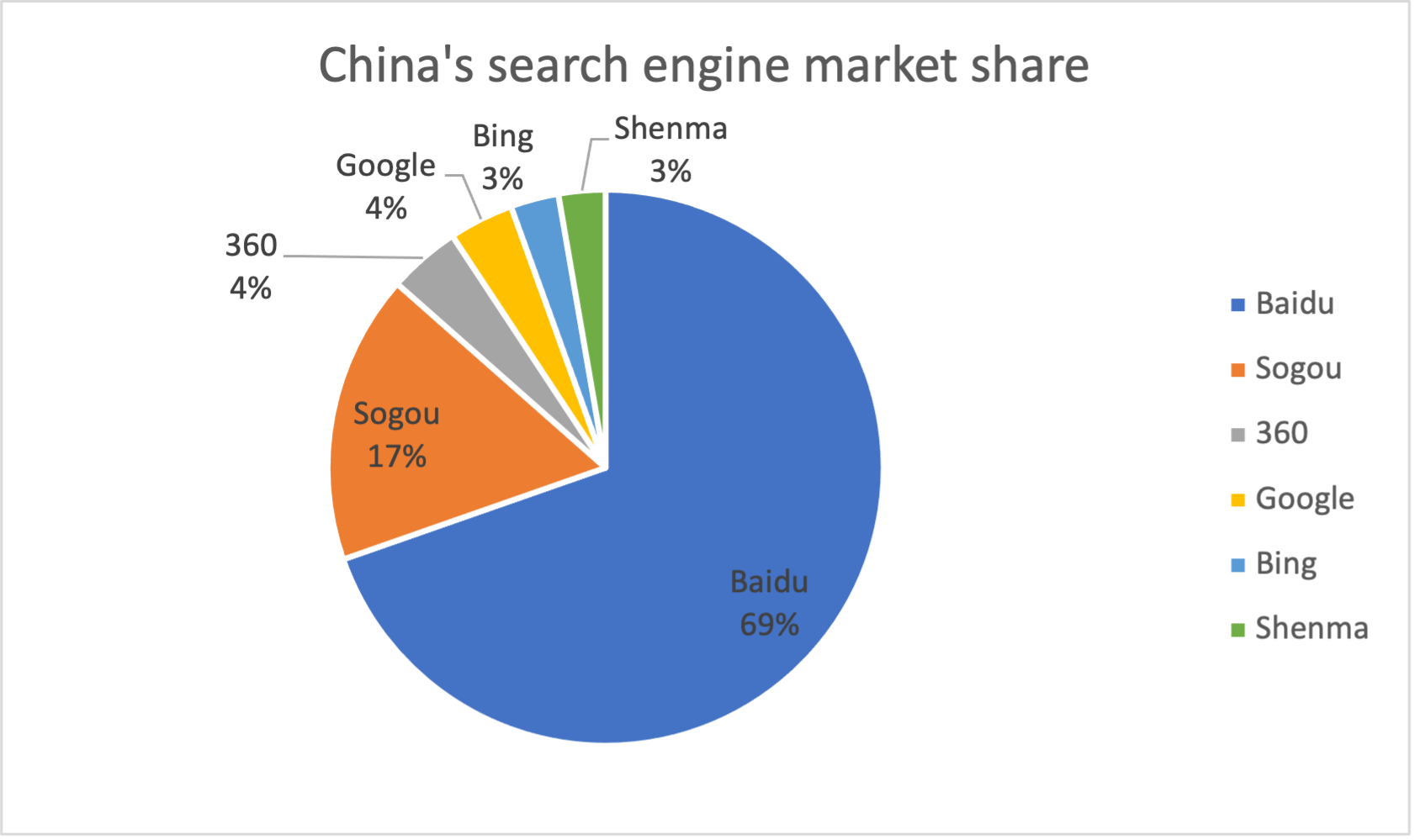
China's search engine market share in 2020
In 2020, the number of Internet users using search engines in China is 770 million. In the search engine market, Baidu occupies the vast majority of the market share, with a market share of 69.55%. The second is Sougo, with a market share of 16...
On This Page
China's Search Engine Market Share in 2020
In the ever-evolving digital landscape of China, the search engine market has undergone significant shifts in recent years. As the world's largest internet market, China's search engine landscape is dominated by a few key players, each vying for a larger share of the user base. In this comprehensive article, we'll delve into the latest market trends and provide crucial insights for international brands looking to navigate the Chinese search engine ecosystem.
The Dominance of Baidu
As the existing content mentioned, Baidu remains the undisputed leader in China's search engine market, commanding a staggering market share of 69.55% in 2020. This remarkable dominance can be attributed to a combination of factors, including Baidu's early mover advantage, its deep understanding of the Chinese market, and its continuous investments in technology and innovation.
Baidu's Strengths:
- Vast user base: With its deep integration into the Chinese digital ecosystem, Baidu has amassed a massive user base, making it the go-to search platform for hundreds of millions of Chinese consumers.
- Localized approach: Baidu has tailored its search algorithms and user experience to cater to the unique preferences and behaviors of Chinese users, giving it a competitive edge over global players.
- Diversified offerings: Beyond its core search engine, Baidu has expanded into a wide range of services, including AI, autonomous driving, and cloud computing, further strengthening its position in the Chinese tech landscape.
The Challenger: Sogou
While Baidu's dominance is undeniable, Sogou, the second-largest search engine in China, has been steadily gaining ground. With a market share of 16.84% in 2020, Sogou has carved out a niche for itself by offering a differentiated user experience and leveraging its strengths in areas like machine translation and voice recognition.
Sogou's Strategies:
- Innovative features: Sogou has been at the forefront of incorporating cutting-edge technologies, such as AI-powered voice search and language translation, into its search experience, appealing to a tech-savvy user base.
- Partnerships and acquisitions: Sogou has strategically partnered with or acquired companies in adjacent industries, such as instant messaging and online education, to expand its reach and diversify its offerings.
- Focus on niche segments: While Baidu dominates the general search market, Sogou has successfully positioned itself as a preferred choice for users seeking specialized information or services, such as medical and financial queries.
The Evolving Landscape: Challengers and Newcomers
Beyond the top two players, the Chinese search engine market has seen the emergence of several other contenders, each with its own unique value proposition and target audience.
Other Key Players:
- 360 Search: With a market share of 4.19%, 360 Search has carved out a niche as a security-focused search engine, appealing to users who prioritize privacy and online safety.
- Google: Despite being largely blocked in mainland China, Google still maintains a presence in the market, primarily serving expatriates and international companies, with a market share of 3.76%.
- Bing: Microsoft's Bing search engine has a modest market share of 2.8% in China, targeting users who prefer an alternative to Baidu or seek cross-border search capabilities.
- Shenma: Operated by Alibaba, Shenma has carved out a 2.72% market share, leveraging its integration with the e-commerce giant's vast ecosystem to cater to users seeking a more seamless shopping experience.
Key Takeaways for International Brands
As international brands navigate the complex and ever-changing Chinese search engine landscape, there are several critical insights to consider:
Baidu Optimization is Essential: Given Baidu's overwhelming dominance, optimizing your online presence and marketing strategies for the Baidu search engine is crucial. This includes ensuring your website is Baidu-friendly, leveraging Baidu's advertising platforms, and staying up-to-date with the platform's algorithm changes.
Diversify Your Search Presence: While Baidu should be the primary focus, international brands should also explore opportunities on other search engines, such as Sogou and 360 Search, to reach a wider audience and stay ahead of the curve.
Embrace Local Partnerships: Collaborating with local Chinese partners, whether in the search engine, e-commerce, or social media space, can provide invaluable insights, resources, and access to the right target audiences.
Continuously Adapt and Innovate: The Chinese search engine market is highly dynamic, with new players and trends emerging regularly. International brands must be agile and adaptable, constantly monitoring the landscape and adjusting their strategies to stay relevant and competitive.
Conclusion
The Chinese search engine market is a complex and rapidly evolving landscape, with Baidu firmly established as the market leader. However, the rise of challengers like Sogou and the emergence of niche players highlight the dynamic nature of this space. For international brands looking to succeed in China, a deep understanding of the market dynamics, a focus on Baidu optimization, and a willingness to diversify and innovate are critical factors for success. By navigating the nuances of the Chinese search engine landscape, international brands can unlock the immense potential of this vast and lucrative market.
Ready to Apply These Insights?
Talk to our China marketing experts and get a strategy tailored to your brand.
Related Articles

618 Shopping Festival 2025: A Strategic Shift in A Digital Shopping Ecosystem in China
The mid‑year 618 Shopping Festival has evolved far beyond a simple discount event. This year, it became a strategic showcase highlighting how Chinese e-commerce is redefining itself through smarter spending, advanced tech, high‑impact content, policy...
19 Jun 2025

China Car Market Report 2023H1
In recent years, China's automotive industry has experienced fast transformation. Technological alliances and partnerships becoming an increasingly focus in each brand's strategy.
3 Oct 2023

How to Write Better Chinese Ad Copies
When writing creative ad copy for the Chinese market, we need to closely consider the audiences, the culture differences, the brand proposition, the product features, creatives and the user journeys. Different products and user journeys caused differ...
28 Sept 2023