
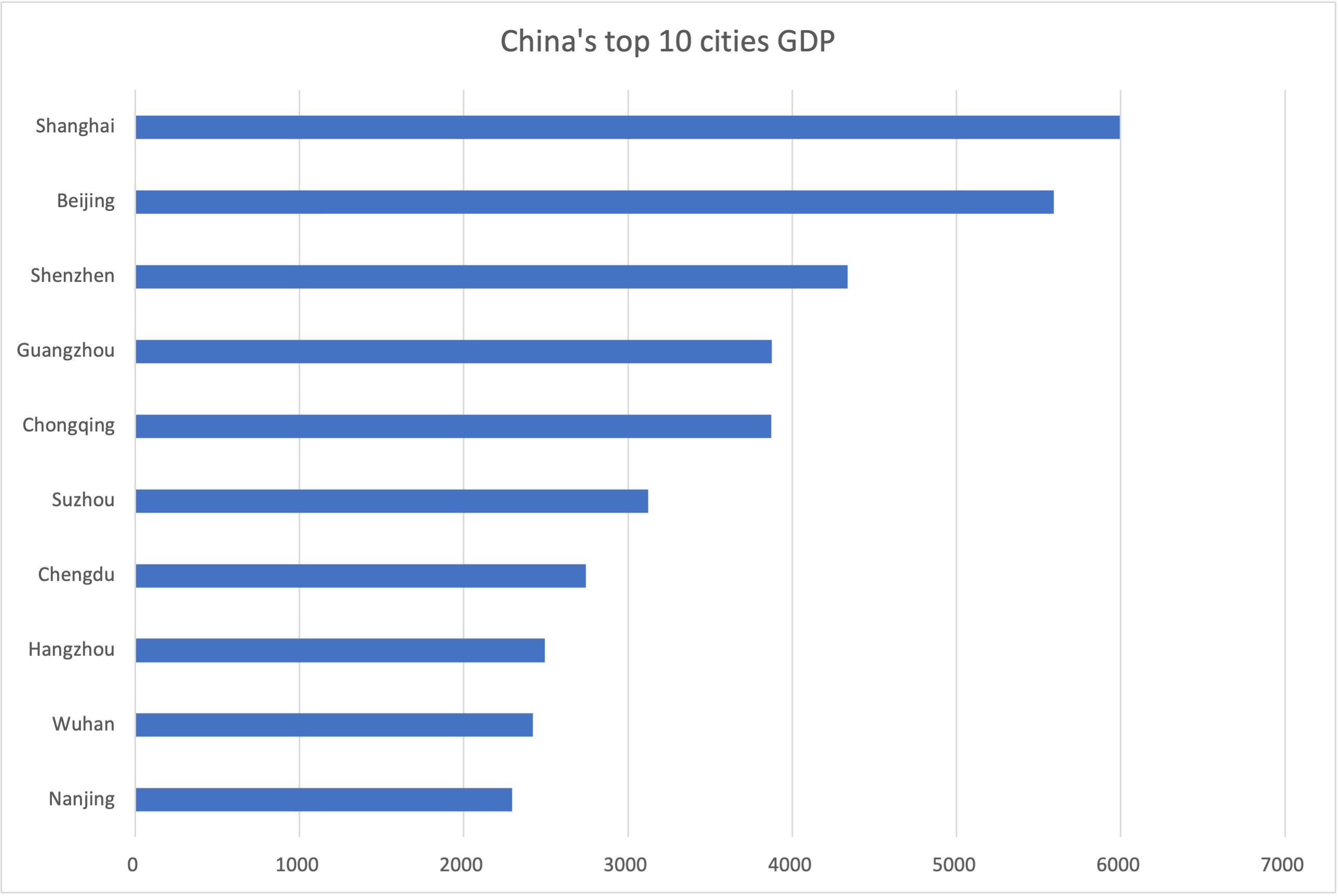
Top 10 cities in China by GDP
In 2020, in China's top cities, Shanghai's GDP ranks first, with 599.5 billion US dollars; Beijing ranks second, with 559.2 billion US dollars; Shenzhen ranks third, with 433.7 billion US dollars; Guangzhou ranks fourth, with 387.5 billion US dollars...
On This Page
Top 10 Cities in China by GDP
China's economic landscape is rapidly evolving, with its cities serving as the driving force behind the country's remarkable growth. As international brands seek to establish a foothold in this dynamic market, understanding the top-performing cities in terms of GDP becomes crucial for strategic planning and decision-making. In this comprehensive article, we delve into the latest data and explore the key insights that can guide global businesses in their China expansion efforts.
China's Economic Powerhouses
According to the latest data, China's top 10 cities by GDP in 2020 are as follows:
- Shanghai - $599.5 billion
- Beijing - $559.2 billion
- Shenzhen - $433.7 billion
- Guangzhou - $387.5 billion
- Chongqing - $387.3 billion
- Suzhou - $312.4 billion
- Chengdu - $274.4 billion
- Wuhan - $249.5 billion
- Hangzhou - $242.0 billion
- Nanjing - $229.5 billion
Exploring the Top-Tier Cities
Shanghai: China's Financial and Innovation Hub
As the top-performing city in terms of GDP, Shanghai has firmly established itself as China's financial and innovation epicenter. The city's strategic location, world-class infrastructure, and thriving business ecosystem make it a prime destination for international brands seeking to capitalize on the country's immense consumer market and technological advancements. Shanghai's robust financial services, advanced manufacturing, and thriving startup scene provide ample opportunities for global companies to collaborate, invest, and expand their footprint in China.
Beijing: The Political and Cultural Powerhouse
Beijing, the nation's capital, is not only a political and administrative center but also a hub of cultural, educational, and technological excellence. The city's GDP growth is largely driven by its strength in sectors such as software and information technology, biotechnology, and advanced manufacturing. International brands seeking to engage with China's policymakers, tap into the country's vast talent pool, and leverage the city's rich cultural heritage will find Beijing an attractive and strategic location.
Shenzhen and Guangzhou: The Pearl River Delta Dynamos
The neighboring cities of Shenzhen and Guangzhou, located in the prosperous Pearl River Delta region, have emerged as powerhouses in their own right. Shenzhen, often dubbed the "Silicon Valley of China," is a global technology and innovation hub, home to tech giants like Huawei, Tencent, and DJI. Guangzhou, on the other hand, is a manufacturing and logistics powerhouse, with a thriving automotive, aerospace, and consumer goods industries. Both cities offer attractive opportunities for international brands to tap into the region's robust supply chains, innovative ecosystem, and rapidly growing consumer market.
Key Insights for International Brands
As international brands navigate the Chinese market, understanding the unique characteristics and strengths of the top-performing cities can greatly inform their expansion strategies. Here are some key insights to consider:
- Market Segmentation: Each of the top cities presents distinct consumer demographics, purchasing behaviors, and cultural nuances. Tailoring marketing and product strategies to these local preferences can be a game-changer for international brands.
- Talent Acquisition: The leading cities in China are home to vast pools of skilled professionals and innovative talent, making them attractive locations for international brands to establish research and development centers, as well as regional headquarters.
- Regulatory Landscape: Understanding the regulatory environment and policy initiatives in each city can help international brands navigate the complex business landscape and identify the most favorable locations for their operations.
- Ecosystem Partnerships: Leveraging the robust business networks, industry clusters, and support systems within these top-tier cities can enable international brands to forge strategic partnerships, access distribution channels, and tap into thriving innovation ecosystems.
- Digital Transformation: The leading cities in China are at the forefront of digital innovation, offering international brands the opportunity to embrace the country's rapidly evolving e-commerce, social media, and fintech landscapes.
Conclusion
As the Chinese economy continues to evolve, the top-performing cities in terms of GDP will play a pivotal role in shaping the country's future. For international brands seeking to establish a successful presence in China, a deep understanding of these economic powerhouses and their unique characteristics is crucial. By aligning their strategies with the strengths and opportunities presented by these cities, global businesses can unlock the vast potential of the world's second-largest economy and position themselves for long-term growth and success.
Ready to Apply These Insights?
Talk to our China marketing experts and get a strategy tailored to your brand.
Related Articles

618 Shopping Festival 2025: A Strategic Shift in A Digital Shopping Ecosystem in China
The mid‑year 618 Shopping Festival has evolved far beyond a simple discount event. This year, it became a strategic showcase highlighting how Chinese e-commerce is redefining itself through smarter spending, advanced tech, high‑impact content, policy...
19 Jun 2025

China Car Market Report 2023H1
In recent years, China's automotive industry has experienced fast transformation. Technological alliances and partnerships becoming an increasingly focus in each brand's strategy.
3 Oct 2023

How to Write Better Chinese Ad Copies
When writing creative ad copy for the Chinese market, we need to closely consider the audiences, the culture differences, the brand proposition, the product features, creatives and the user journeys. Different products and user journeys caused differ...
28 Sept 2023