
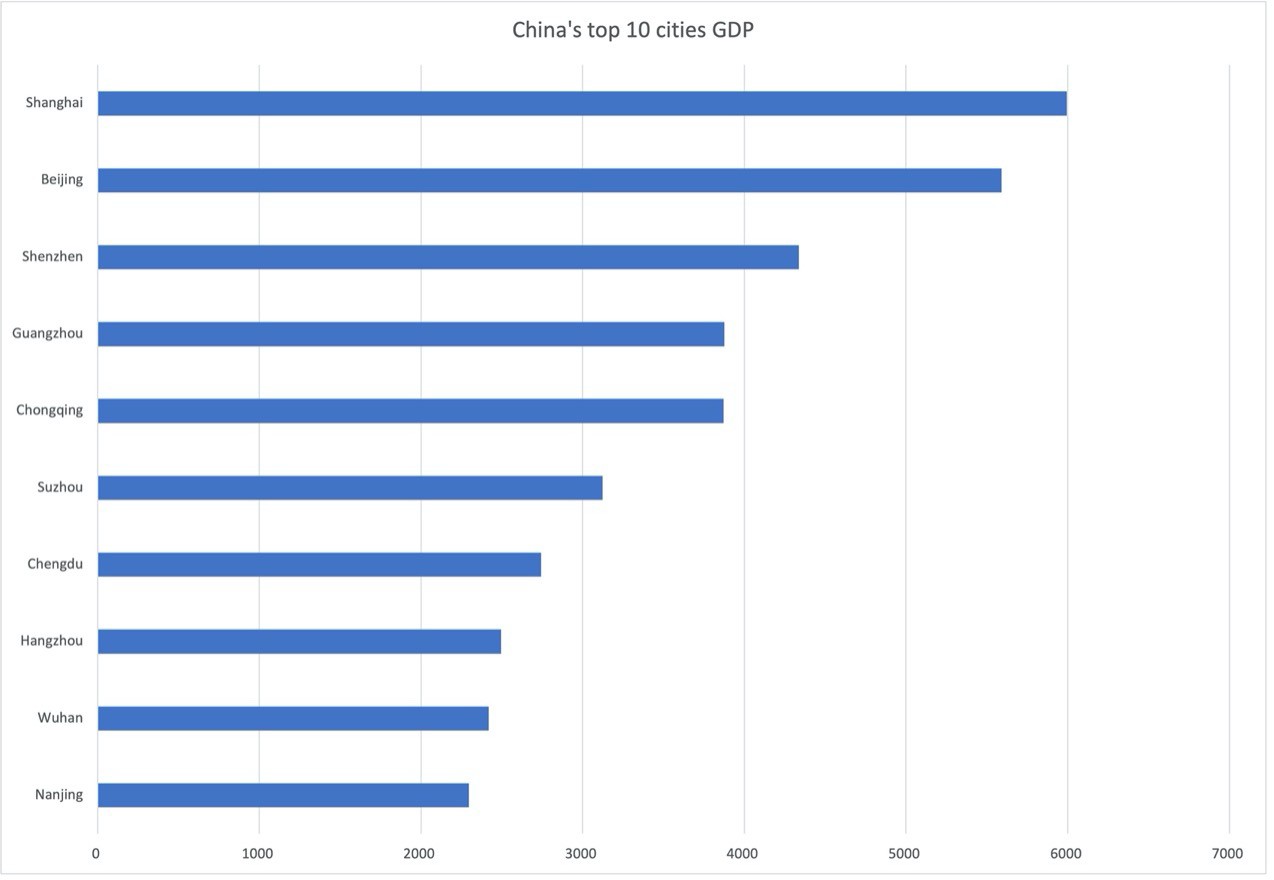
Top 10 GDP of China's top tier cities
In 2020, in China's big cities, Shanghai's GDP ranks first, with 599.5 billion US dollars; Beijing ranks second, with 559.2 billion US dollars; Shenzhen ranks third, with 433.7 billion US dollars; Guangzhou ranks fourth, with 387.5 billion US dollars...
On This Page
Top 10 GDP of China's Top Tier Cities
China's rapid economic growth over the past few decades has transformed the country into a global economic powerhouse, with several of its cities emerging as key hubs for business, innovation, and investment. Understanding the economic landscape of these top-tier cities is crucial for international brands looking to enter or expand their presence in the Chinese market.
The Rise of China's Economic Powerhouses
In 2020, China's GDP reached a staggering $14.72 trillion, making it the second-largest economy in the world. This impressive growth can be largely attributed to the performance of China's top-tier cities, which have become the driving force behind the country's economic development.
According to the latest data, Shanghai, the financial capital of China, tops the list with a GDP of $599.5 billion, followed by Beijing, the political and cultural center, with a GDP of $559.2 billion. Shenzhen, a hub for technology and innovation, ranks third with a GDP of $433.7 billion, while Guangzhou, a major manufacturing and logistics hub, comes in fourth with a GDP of $387.5 billion.
Rounding out the top 10 are Chongqing ($387.3 billion), Suzhou ($312.4 billion), Chengdu ($274.4 billion), Wuhan ($249.5 billion), Hangzhou ($242 billion), and Nanjing ($229.5 billion). These cities have become magnets for both domestic and international investment, attracting a diverse range of industries and fostering a thriving entrepreneurial ecosystem.
Factors Driving the Growth of China's Top-Tier Cities
Several key factors have contributed to the rapid economic growth of China's top-tier cities:
- Infrastructure Development: Massive investments in infrastructure, including high-speed rail, highways, and airports, have dramatically improved connectivity and accessibility within and between these cities, facilitating the movement of goods, people, and ideas.
- Talent Attraction: China's top-tier cities have become hubs for talent, attracting highly skilled professionals and entrepreneurs from across the country and around the world, who are drawn by the abundance of opportunities and the dynamic business environment.
- Technological Innovation: Cities like Shenzhen and Hangzhou have emerged as global leaders in technological innovation, with a thriving startup ecosystem and a strong presence of leading tech companies, driving the growth of high-value industries.
- Policy Support: The Chinese government has implemented a range of policies and incentives to support the development of these top-tier cities, including tax benefits, streamlined regulations, and targeted investment in key industries.
Implications for International Brands
For international brands looking to enter or expand in the Chinese market, the economic power and dynamic nature of these top-tier cities present both opportunities and challenges:
- Market Potential: With their large populations, growing middle classes, and high levels of disposable income, these top-tier cities offer vast potential for international brands to reach and engage with affluent consumers.
- Competitive Landscape: The intense competition in these cities means that international brands must differentiate themselves, offer unique value propositions, and develop tailored marketing strategies to stand out in a crowded marketplace.
- Digital Transformation: The rapid digital transformation of these cities, driven by the widespread adoption of mobile technology and e-commerce, requires international brands to have a strong online presence and a comprehensive digital marketing strategy.
- Regulatory Environment: Navigating the complex regulatory landscape in China, which can vary across different regions and industries, is crucial for international brands to ensure compliance and avoid potential legal and financial risks.
- Localization and Adaptation: Successful international brands in China have often found that localizing their products, services, and marketing approaches to cater to the unique preferences and cultural nuances of these top-tier cities is essential for building brand loyalty and driving sales.
Key Takeaways for International Brands
As international brands look to capitalize on the economic opportunities presented by China's top-tier cities, the following key takeaways should be considered:
- Prioritize Market Research: Conduct thorough market research to understand the specific needs, preferences, and purchasing behavior of consumers in each top-tier city, and use these insights to inform your business and marketing strategies.
- Invest in Digital Transformation: Develop a strong online presence and leverage digital marketing tools and platforms to reach and engage with the increasingly tech-savvy consumers in these cities.
- Foster Localization and Adaptability: Be willing to adapt your products, services, and brand messaging to cater to the unique cultural and market dynamics of each top-tier city, ensuring that your offerings resonate with the local consumer base.
- Leverage Partnerships and Ecosystems: Explore collaborations with local partners, such as e-commerce platforms, influencers, and logistics providers, to leverage their market expertise and distribution networks and enhance your brand's visibility and accessibility.
- Stay Agile and Responsive: Monitor the rapidly evolving market conditions in these top-tier cities and be prepared to quickly adapt your strategies and tactics to capitalize on emerging trends and opportunities.
Conclusion
China's top-tier cities have become the driving force behind the country's remarkable economic growth, offering vast potential for international brands looking to enter or expand their presence in the Chinese market. By understanding the unique dynamics and characteristics of these cities, and developing tailored strategies to navigate the competitive landscape and regulatory environment, international brands can unlock the incredible growth opportunities that these economic powerhouses present.
Ready to Apply These Insights?
Talk to our China marketing experts and get a strategy tailored to your brand.
Related Articles

618 Shopping Festival 2025: A Strategic Shift in A Digital Shopping Ecosystem in China
The mid‑year 618 Shopping Festival has evolved far beyond a simple discount event. This year, it became a strategic showcase highlighting how Chinese e-commerce is redefining itself through smarter spending, advanced tech, high‑impact content, policy...
19 Jun 2025

China Car Market Report 2023H1
In recent years, China's automotive industry has experienced fast transformation. Technological alliances and partnerships becoming an increasingly focus in each brand's strategy.
3 Oct 2023

How to Write Better Chinese Ad Copies
When writing creative ad copy for the Chinese market, we need to closely consider the audiences, the culture differences, the brand proposition, the product features, creatives and the user journeys. Different products and user journeys caused differ...
28 Sept 2023