
Online Population 2021: China vs Europe vs USA
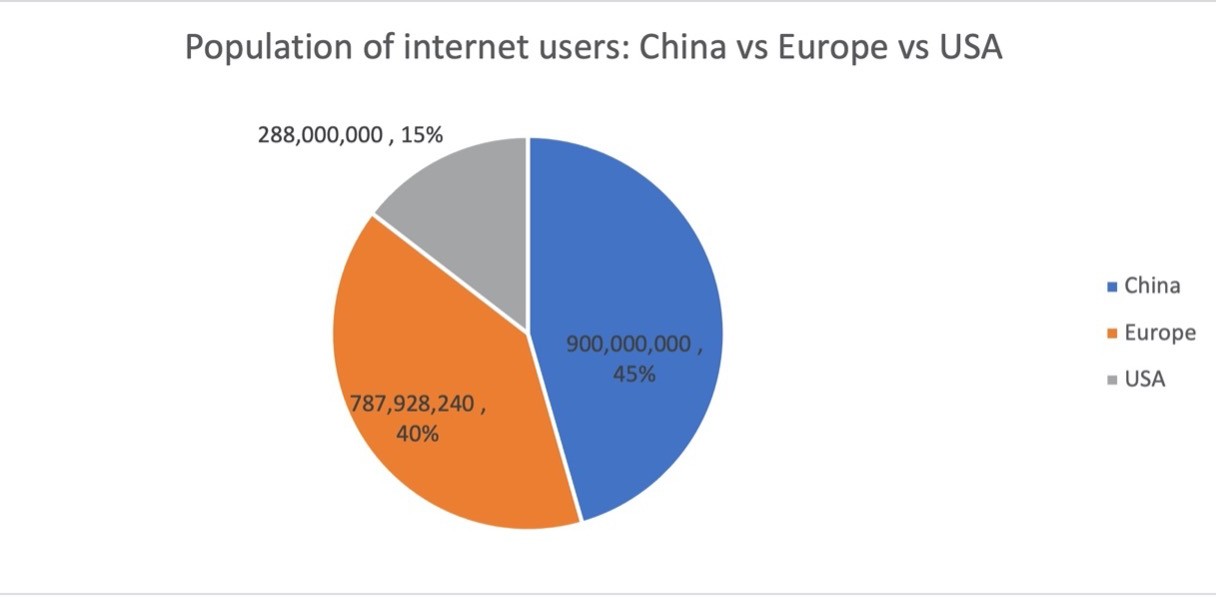
In 2020, the number of online users in China reached 900 million, that in Europe were 788 million, and that in the United States reached 288 million;
On This Page
Online Population 2021: China vs Europe vs USA
Introduction
In today's digital age, the online population has become a critical metric for businesses and marketers looking to reach and engage with consumers. As the world's largest and most dynamic digital market, China has emerged as a prime battleground for international brands seeking growth and success. By contrast, the European and U.S. markets, while significant, present their own unique challenges and opportunities. In this article, we'll dive deep into the latest online population data for these three key regions, exploring the implications for brands and offering practical insights to help navigate the digital landscape.
China's Soaring Online Population
China's digital landscape has seen remarkable growth in recent years, with the number of internet users reaching a staggering 900 million in 2020. This figure represents a vast and diverse audience, encompassing a wide range of demographics, interests, and purchasing power. The sheer size of China's online population presents a significant opportunity for international brands looking to expand their reach and tap into this lucrative market.
However, it's important to note that the Chinese digital ecosystem operates quite differently from Western markets. Platforms such as WeChat, Weibo, and Douyin (TikTok's Chinese counterpart) have become the primary channels for consumer engagement and e-commerce. Understanding the unique dynamics and user behavior on these platforms is crucial for brands seeking to succeed in China.
Europe's Steady Digital Growth
While China's online population has experienced rapid expansion, Europe's digital landscape has also seen steady growth, reaching 788 million users in 2020. This sizable audience represents a diverse range of cultures, languages, and consumer preferences, presenting both opportunities and challenges for international brands.
One key consideration for brands entering the European market is the fragmented nature of the digital landscape. Unlike China's highly centralized digital ecosystem, Europe's online landscape is more decentralized, with various national and regional platforms coexisting. This requires a more nuanced and localized approach to digital marketing and e-commerce strategies.
The United States: A Mature Digital Market
The United States, with its 288 million online users, represents a mature digital market with its own unique characteristics. While the overall size of the U.S. online population is smaller compared to China and Europe, it is still a highly attractive and lucrative market for international brands. The U.S. digital landscape is dominated by platforms like Google, Facebook, and Amazon, which offer robust advertising and e-commerce capabilities.
However, the U.S. market is also highly competitive, with a wide range of established domestic and international brands vying for consumer attention. Brands looking to succeed in the U.S. must navigate a complex regulatory environment, evolving consumer preferences, and the dominance of tech giants in the digital space.
Key Takeaways for International Brands
- Understand the unique dynamics of each market: China, Europe, and the U.S. each have their own distinct digital landscapes, platforms, and consumer behaviors. Brands must adapt their strategies accordingly.
- Leverage local expertise and partnerships: Navigating the complexities of these markets often requires the guidance of local experts and strategic partnerships with local players.
- Prioritize localization and personalization: Successful brands tailor their content, messaging, and offerings to the specific needs and preferences of each market's online population.
- Embrace a multi-channel approach: Diversifying your digital presence across relevant platforms and channels can help you reach and engage with a broader audience.
- Stay agile and responsive to market changes: The digital landscape is constantly evolving, so brands must be prepared to adapt their strategies to keep pace with shifting consumer trends and platform updates.
Conclusion
The online population in China, Europe, and the United States represents a vast and dynamic landscape for international brands to navigate. By understanding the unique characteristics of each market, leveraging local expertise, and adopting a flexible, multi-channel approach, brands can unlock significant growth opportunities and forge meaningful connections with their target audiences. As the digital world continues to evolve, staying attuned to these shifting trends and adapting accordingly will be key to long-term success in these critical markets.
Ready to Apply These Insights?
Talk to our China marketing experts and get a strategy tailored to your brand.
Related Articles

618 Shopping Festival 2025: A Strategic Shift in A Digital Shopping Ecosystem in China
The mid‑year 618 Shopping Festival has evolved far beyond a simple discount event. This year, it became a strategic showcase highlighting how Chinese e-commerce is redefining itself through smarter spending, advanced tech, high‑impact content, policy...
19 Jun 2025

China Car Market Report 2023H1
In recent years, China's automotive industry has experienced fast transformation. Technological alliances and partnerships becoming an increasingly focus in each brand's strategy.
3 Oct 2023

How to Write Better Chinese Ad Copies
When writing creative ad copy for the Chinese market, we need to closely consider the audiences, the culture differences, the brand proposition, the product features, creatives and the user journeys. Different products and user journeys caused differ...
28 Sept 2023