
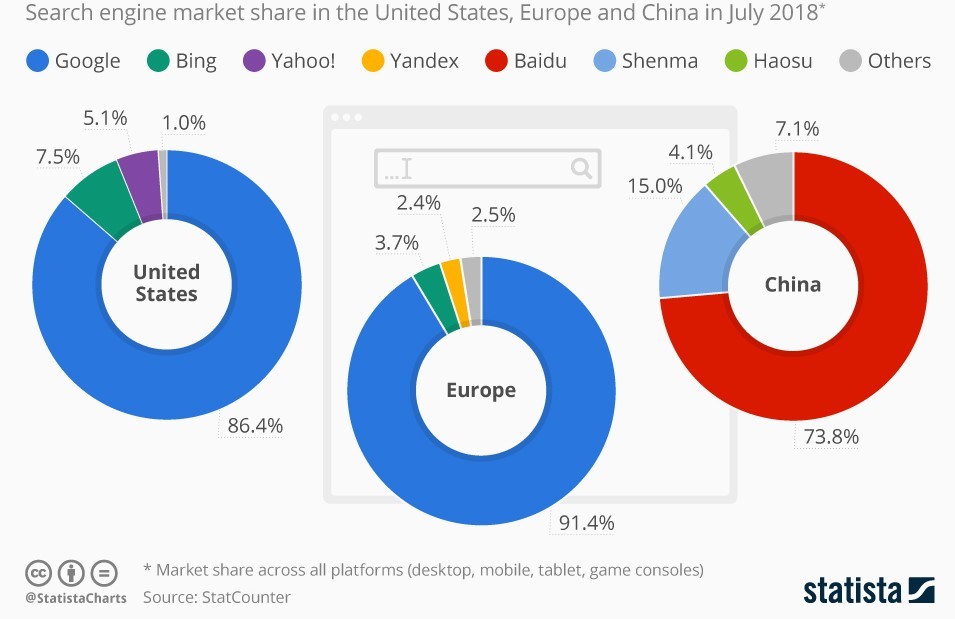
The Google's market share in China 2018
Google is recently claim to re-enter the Chinese search market (project Dragonfly) after 8 years when they left Mainland China citing cyber attacks and censorship. China is a huge market for any business to enter however since Google exiting China, t...
On This Page
The Google's Market Share in China in 2018
The Chinese digital landscape is one of the most dynamic and rapidly evolving markets in the world, and understanding the competitive landscape is crucial for any international brand looking to establish a presence in this lucrative yet challenging environment. In 2018, the search engine market in China saw significant shifts, with Google's potential re-entry into the market posing both opportunities and threats for businesses operating in the country.
The Rise of China's Domestic Search Engines
Since Google's exit from mainland China in 2010, the search engine landscape has undergone a dramatic transformation. The void left by Google has been filled by a number of domestic Chinese players, each with its own unique strengths and market share.
Baidu, the undisputed leader in the Chinese search engine market, has maintained its dominance, commanding a market share of over 70% as of 2018. The company's deep integration with China's online ecosystem, coupled with its extensive investments in artificial intelligence and voice search, have helped it solidify its position as the go-to search engine for Chinese consumers.
Haosou (AKA 360), the second-largest search engine in China, has gained significant traction in recent years, particularly in the mobile search market. With a market share of around 10%, Haosou has become a formidable competitor, leveraging its partnerships with leading Chinese tech companies and its focus on niche search verticals.
Shenma, the mobile-focused search engine owned by Alibaba, has also carved out a significant slice of the market, with a market share of around 8% as of 2018. Shenma's integration with Alibaba's e-commerce and digital ecosystem has made it a popular choice among mobile-savvy Chinese consumers.
Finally, Sogou, the search engine backed by Tencent, has also gained a foothold in the Chinese market, with a market share of around 3% as of 2018. Sogou's partnership with Tencent has allowed it to leverage the latter's vast social media and messaging platforms, further strengthening its position in the market.
Google's Potential Re-entry and the Challenges Ahead
In 2018, there were reports that Google was considering a re-entry into the Chinese market with a censored version of its search engine, dubbed "Project Dragonfly." This move, if successful, would mark a significant shift in the competitive landscape and could have far-reaching implications for international brands operating in China.
However, Google's potential re-entry faces several challenges:
- Regulatory Hurdles: The Chinese government's strict internet censorship and data localization requirements pose significant obstacles for foreign tech companies looking to operate in the country. Google's previous exit was largely due to its unwillingness to comply with these regulations, and it remains to be seen whether the company will be able to navigate the complex regulatory environment this time around.
- Entrenched Domestic Competition: The Chinese search engine market is now dominated by well-established domestic players, each with strong brand recognition, deep integration with the local ecosystem, and loyal user bases. Dislodging these incumbents will be a formidable challenge for Google, requiring significant investment and a tailored strategy.
- User Preferences and Behavior: Chinese internet users have become accustomed to the features and user experiences offered by domestic search engines, which may differ significantly from Google's global offerings. Adapting to local preferences and user habits will be crucial for Google's success in the market.
Implications for International Brands
The shifting dynamics in the Chinese search engine market have significant implications for international brands looking to establish or grow their presence in the country:
- Search Engine Optimization (SEO) and Visibility: With Baidu firmly entrenched as the dominant search engine, international brands must prioritize optimizing their online presence for Baidu's algorithms and user preferences. Failing to do so can result in poor visibility and reduced customer engagement.
- Advertising and Marketing Strategies: The various search engines in China offer different advertising and marketing capabilities, requiring brands to tailor their strategies accordingly. Understanding the unique strengths and targeting options of platforms like Baidu, Haosou, and Shenma is crucial for maximizing the impact of marketing investments.
- Mobile-first Approach: With the rise of mobile search in China, international brands must ensure that their digital presence is optimized for mobile devices and integrated with popular mobile apps and platforms, such as WeChat and Alibaba's ecosystem.
- Collaboration with Local Partners: Partnering with established Chinese tech companies and digital agencies can provide international brands with valuable insights, resources, and access to the local market, helping them navigate the complexities of the Chinese digital landscape more effectively.
Key Takeaways
The Chinese search engine market in 2018 was characterized by the dominance of domestic players, the potential re-entry of Google, and the evolving needs and preferences of Chinese consumers. For international brands, success in this dynamic market requires:
- Prioritizing Baidu optimization and understanding the unique features and capabilities of other leading search engines
- Developing mobile-first digital strategies and integrating with popular Chinese mobile apps and platforms
- Collaborating with local partners to leverage their market knowledge, resources, and established relationships
- Continuously adapting to the rapidly changing competitive landscape and evolving consumer behavior
Conclusion
The Chinese search engine market in 2018 was a complex and dynamic landscape, with domestic players maintaining a strong foothold and the potential re-entry of Google posing both opportunities and challenges for international brands. By understanding the market dynamics, adapting their digital strategies, and leveraging local partnerships, international brands can navigate this evolving market and establish a successful presence in China.
Ready to Apply These Insights?
Talk to our China marketing experts and get a strategy tailored to your brand.
Related Articles

618 Shopping Festival 2025: A Strategic Shift in A Digital Shopping Ecosystem in China
The mid‑year 618 Shopping Festival has evolved far beyond a simple discount event. This year, it became a strategic showcase highlighting how Chinese e-commerce is redefining itself through smarter spending, advanced tech, high‑impact content, policy...
19 Jun 2025

China Car Market Report 2023H1
In recent years, China's automotive industry has experienced fast transformation. Technological alliances and partnerships becoming an increasingly focus in each brand's strategy.
3 Oct 2023

How to Write Better Chinese Ad Copies
When writing creative ad copy for the Chinese market, we need to closely consider the audiences, the culture differences, the brand proposition, the product features, creatives and the user journeys. Different products and user journeys caused differ...
28 Sept 2023